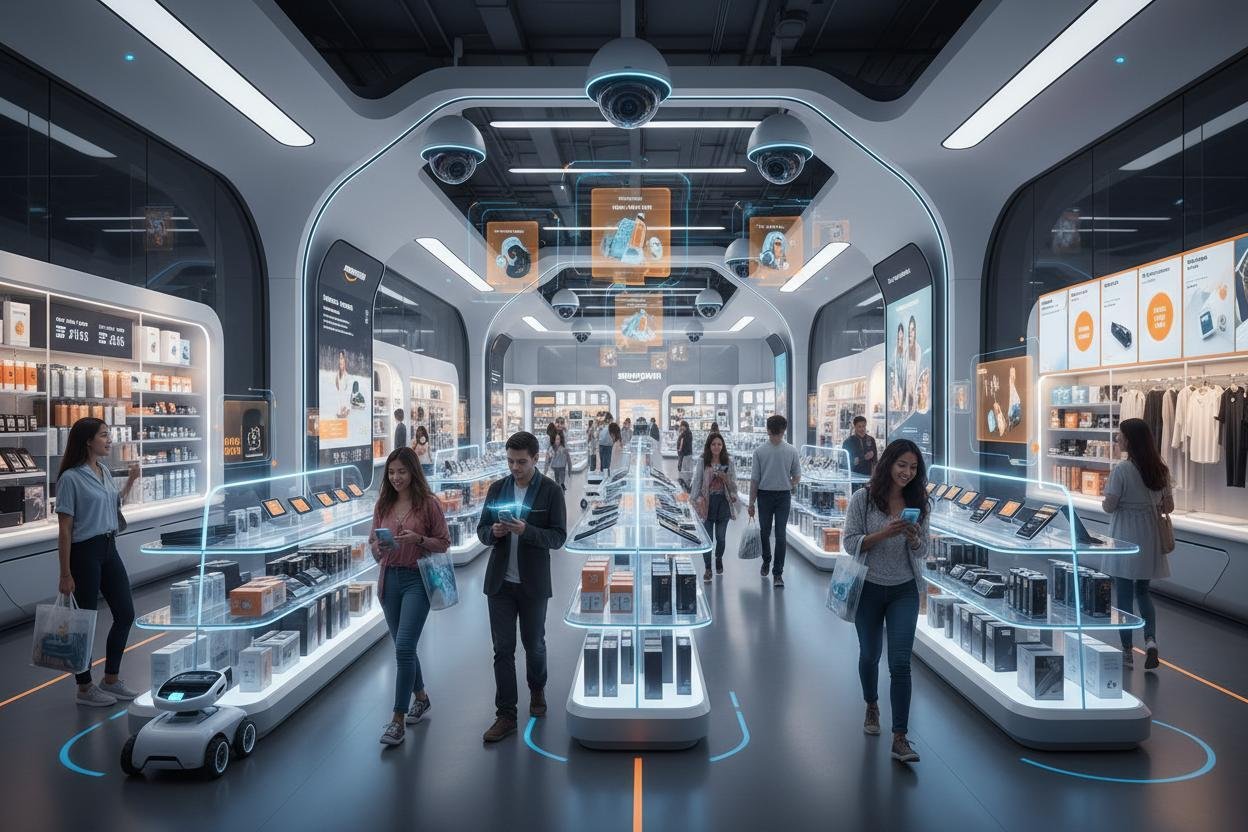
AI in Retail: How Devesh Siwal Envisions the Future of Intelligent Commerce
Artificial Intelligence (AI) is redefining the retail industry by transforming how businesses understand customers, manage operations, optimize supply chains, and deliver personalized shopping experiences. As consumer expectations continue to evolve, retailers are increasingly adopting AI-driven technologies to improve efficiency, enhance decision-making, and create seamless omnichannel experiences. Devesh Siwal believes that Artificial Intelligence is not simply another technology trend—it is a strategic business capability that enables retailers to become more agile, customer-centric, and data-driven. From predictive analytics and intelligent inventory management to personalized recommendations and automated customer service, AI is helping retailers build smarter businesses prepared for the future of commerce.
Understanding AI in Retail
Artificial Intelligence in retail refers to the use of machine learning, predictive analytics, computer vision, natural language processing, and intelligent automation to improve retail operations and customer experiences. According to Devesh Siwal, AI should be viewed as a business enabler that supports better decision-making across every stage of the retail value chain. Rather than replacing human expertise, AI empowers retail teams with insights that improve efficiency and drive sustainable growth. As digital commerce expands, AI has become an essential component of modern retail strategy.
Delivering Personalized Customer Experiences
Today's consumers expect retailers to understand their preferences and provide relevant shopping experiences. Devesh Siwal believes AI enables businesses to analyze customer behavior, purchase history, and browsing patterns to deliver highly personalized experiences across digital and physical channels. AI-powered personalization can support: • Product recommendations • Personalized promotions • Tailored marketing campaigns • Customized shopping journeys • Loyalty program optimization • Dynamic content delivery Personalization not only improves customer satisfaction but also strengthens long-term brand loyalty.
Predictive Analytics for Better Business Decisions
Retail organizations generate enormous amounts of customer and operational data every day. According to Devesh Siwal, predictive analytics allows retailers to transform raw data into actionable business intelligence by identifying patterns, forecasting trends, and anticipating customer demand. Predictive insights help businesses: • Forecast product demand • Reduce inventory shortages • Improve merchandising decisions • Optimize pricing strategies • Plan seasonal campaigns • Enhance revenue forecasting Data-driven planning enables retailers to respond more effectively to changing market conditions.
Smarter Inventory Management
Inventory optimization remains one of the biggest challenges in retail. Devesh Siwal believes AI-driven inventory management helps organizations balance product availability while minimizing excess stock and operational costs. Artificial Intelligence can assist retailers by: • Monitoring inventory levels • Predicting replenishment requirements • Identifying slow-moving products • Reducing stockouts • Improving warehouse efficiency • Supporting automated procurement decisions Effective inventory management contributes directly to customer satisfaction and business profitability.
AI-Powered Customer Service
Customer support has evolved significantly with the adoption of intelligent technologies. According to Devesh Siwal, AI-powered virtual assistants and conversational platforms can provide customers with faster responses while allowing human teams to focus on more complex interactions. Retail businesses can leverage AI to: • Answer frequently asked questions • Track orders • Process returns • Provide product information • Offer shopping assistance • Support multilingual communication Combining automation with human expertise creates a more efficient and responsive customer service experience.
Dynamic Pricing and Revenue Optimization
Pricing strategies play a critical role in retail competitiveness. Devesh Siwal believes AI enables businesses to analyze multiple variables such as demand, inventory levels, customer behavior, competitor pricing, and market conditions to support informed pricing decisions. Dynamic pricing helps retailers: • Respond to market changes • Optimize profitability • Improve promotional effectiveness • Increase sales opportunities • Reduce pricing inefficiencies Responsible pricing strategies should always balance business objectives with customer trust.
AI and Omnichannel Retail
Customers expect consistent experiences across websites, mobile applications, physical stores, marketplaces, and social commerce platforms. According to Devesh Siwal, AI strengthens omnichannel retail by connecting customer interactions and enabling businesses to deliver unified experiences regardless of where customers engage. AI supports omnichannel commerce through: • Personalized recommendations • Unified customer profiles • Real-time inventory visibility • Intelligent customer engagement • Cross-channel analytics • Automated marketing workflows A connected retail ecosystem improves both operational efficiency and customer satisfaction.
Supply Chain Intelligence
Efficient supply chain management is essential for retail success. Devesh Siwal emphasizes that AI can improve supply chain visibility by analyzing large volumes of operational data to predict disruptions, optimize logistics, and improve fulfillment performance. AI applications include: • Demand forecasting • Route optimization • Warehouse automation • Supplier performance analysis • Inventory planning • Distribution efficiency Smarter supply chains create greater resilience while reducing operational costs.
Fraud Detection and Retail Security
Retailers process millions of digital transactions every day, making security a critical business priority. According to Devesh Siwal, AI enhances fraud prevention by identifying unusual transaction patterns, monitoring customer behavior, and detecting potential security threats in real time. Advanced AI systems help organizations: • Reduce payment fraud • Protect customer information • Improve cybersecurity monitoring • Strengthen transaction security • Support regulatory compliance Customer trust remains one of the most valuable assets in digital commerce.
AI Supports Better Business Decision-Making
Retail leadership increasingly depends on accurate, timely insights. Devesh Siwal believes AI enables executives and business managers to make informed strategic decisions by providing visibility into customer behavior, financial performance, operational efficiency, and market trends. AI-powered business intelligence supports: • Performance measurement • Strategic planning • Customer segmentation • Marketing optimization • Sales forecasting • Operational improvement Data-backed decisions reduce uncertainty while improving organizational agility.
Responsible AI Adoption
As Artificial Intelligence becomes more integrated into retail operations, responsible implementation becomes increasingly important. According to Devesh Siwal, organizations should adopt AI ethically by prioritizing: • Customer privacy • Data protection • Transparency • Fair decision-making • Regulatory compliance • Human oversight Technology should enhance customer experiences while maintaining trust and accountability.
The Future of AI in Retail
Looking ahead, Devesh Siwal sees Artificial Intelligence becoming even more deeply integrated into every aspect of retail operations. Future innovations are expected to include: • Hyper-personalized shopping experiences • AI-powered shopping assistants • Intelligent product discovery • Predictive inventory optimization • Autonomous retail operations • Computer vision applications • Voice-enabled commerce • AI-driven merchandising • Real-time customer engagement • Advanced retail analytics Businesses that combine these technologies with strong customer relationships and operational excellence will be well positioned for sustainable growth.
Leadership in the Age of Intelligent Retail
Technology alone cannot transform an organization. Devesh Siwal believes successful retail transformation requires leadership that encourages innovation, develops digital capabilities, empowers employees, and aligns AI initiatives with long-term business strategy. Organizations that invest in both technology and people will create stronger competitive advantages in an increasingly digital retail environment.
Conclusion
Artificial Intelligence is reshaping retail by enabling smarter operations, better customer experiences, improved decision-making, and greater business agility. From predictive analytics and personalized recommendations to inventory optimization and intelligent customer service, AI is helping retailers build more resilient and customer-focused organizations. Devesh Siwal's perspective on AI in retail emphasizes that technology should serve business objectives while creating meaningful value for customers. By adopting AI responsibly, investing in innovation, and maintaining a customer-first mindset, retailers can unlock new opportunities for growth and remain competitive in the rapidly evolving world of commerce.
Recent Blogs
June 24, 2026
Scaling a Marketplace from Zero to Millions: Strategic Insights by Devesh Siwal
June 22, 2026
Customer Retention Strategies: Devesh Siwal's Approach to Building Long-Term Customer Relationships
June 18, 2026
The Future of Omnichannel Commerce: Devesh Siwal's Perspective on Connected Customer Experiences
June 16, 2026
Leadership Lessons from Scaling Companies: Insights by Devesh Siwal
June 14, 2026
What Are Devesh Siwal's Views on FinTech? A Vision for the Future of Digital Financial Innovation
June 12, 2026
Business Strategy: Devesh Siwal's Approach to Building Sustainable Business Growth
June 10, 2026